
Dancing to Freedom
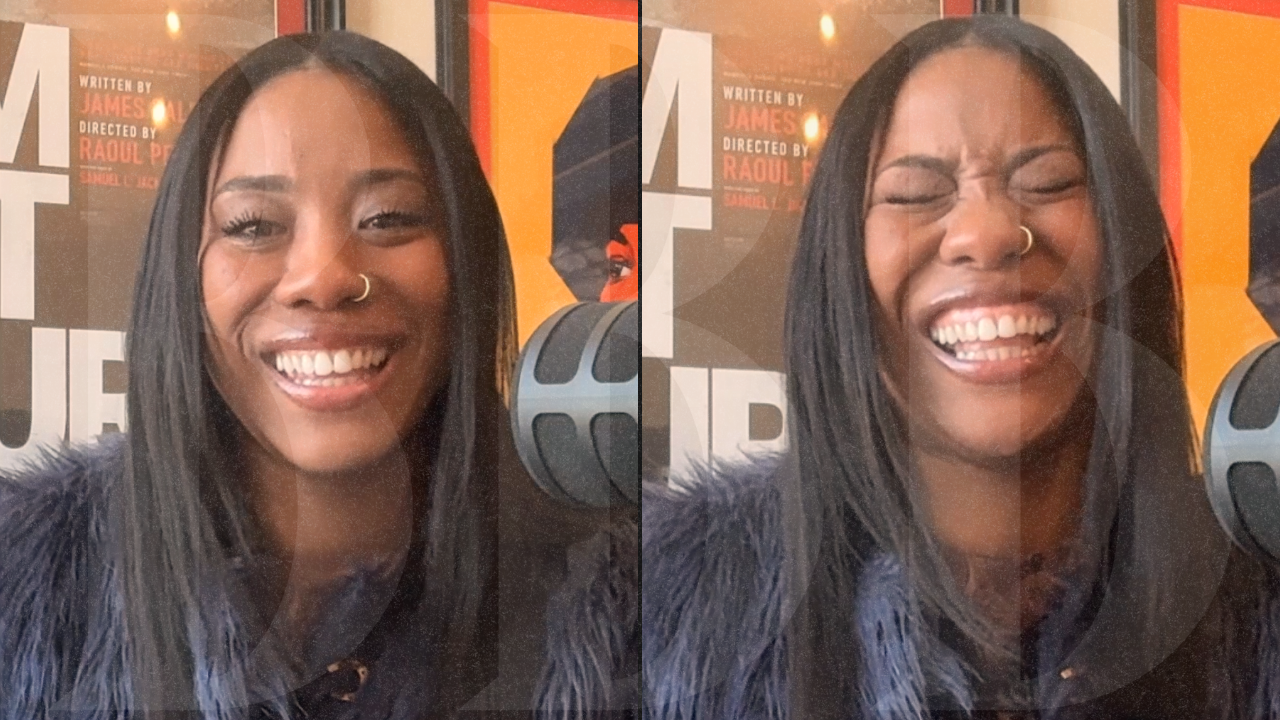
Theatre-maker and cosmological enchantress Candice D’Meza says Harriet Tubman’s life and legacy prove ‘impossible’ is a matter of perspective—and one she won’t entertain: ‘the present moment is not fixed, it is malleable; and if I think it’s fixed, it’s because I’ve abandoned myself.’
‘We can build better societies than this. We can do better than this. I have to remind myself that nothing can be built that I cannot see. The Manifest Destiny document, written by John L. O’Sullivan in 1845, outlaid a vision for America—that it is the white man’s duty to subdue the earth and conquer the natives, to expand into world where they see themselves as free—and it was so compelling and sensorially-rich that people took action to make it happen. He wrote that he was visioning a hundred years out. So, is he a prophet, or is this what the imagination can do?’
CANDICE D’MEZA
ThIS CONVERSATION is available wherever you listen to podcasts.
TRANSCRIPT
This conversation opens with Our Life Together, which can be read here.
Josh:
Candice, I am so honoured to have you here. It is so crazy to be marvelling at you on Instagram for all these months and to finally have you in my computer. Thank you so much for being here.
Candice:
I am entirely delighted. I can’t tell you how excited I am.
Josh:
As you know, to open my conversations on Busy Being Black, I ask all of my guests the same question: How’s your heart?
Candice:
My heart is battle-worn and hopeful. I feel like my heart is the type of hopeful that only comes through living through certain experiences where you realise that you are stronger. My heart is in that place where I feel like the old church mothers in the Baptist churches—there’s this knowing that they have in this rocking and this humming. I used to always wonder; you could see it in their eyes. There’s something there, and I think I’m starting to feel what the posture of the heart is in that space. It’s like you’ve lived through enough to know that you’ll live through a lot more. And that’s how my heart feels right now.
Josh:
That landed right in the gut. I think of all the times I’ve doubted myself, and I think that’s what I’m feeling at the moment—that knowing that you can endure sometimes arrives after the fact. I’m really curious to know when that knowing arrived for you, or when you started to see it approaching. Maybe you were putting up an armour that was not obstructing, but affirming.
Candice:
I turned 40 in November, and now I am blessed to have the gift of hindsight. I’ve lived long enough to make meaning through the things that have happened, which is so new. There’s this dialogue happening where I remember very clearly, in very specific moments, being like, I have no idea how I’ll live through this. I can’t even fathom who I can be on the other side.
I remember a very poignant conversation with my mum where she really dropped into something that was real—not dogmatic or Christian, but a real moment of saying, "You feel like you’ll never make it through, and then one day you look up and your deliverance would’ve come and you don’t even know when it happened."
I had to know it before I knew it in my body. I had to choose to know it and trust it. I didn’t know truly if there was something on the other side of that. Now I can look back and say that she was correct. But it was an active choice to believe it before you have the evidence that it will work out—that you will survive and, dare I say, potentially thrive. Who could have imagined?
Josh:
Is there something you’ve learned to do that has helped you encounter your own knowing or intuition? I understand that for you, this will be a polyphonic, multidisciplinary engagement with yourself on multiple planes. Part of what I’m moving through is landing back into my body more fully—learning to re-engage with what Minna Salami calls ‘sensuous knowledge’. What do you do that helps you nurture your intuition regularly?
Candice:
I love the idea of integrating the body and the sensuous. I do a thing—I don’t know what I call it—it’s kind of like ‘future scripting’. At this point now, I know that nothing is mundane. Years ago, I couldn’t live in the moment; I couldn’t live in the body when I felt like I didn’t like the environment I was in. I would try to escape it, like meditating too much, trying to get up and out of it.
Now, I drop deep into the body and the moment. It looks like: clean your house and talk about the lens through which you view the moment. Sometimes I will imagine my future self—the version of me who already knows that the kids are okay and the bills will get paid, because I know now that it always has. If I can’t see it, I have to bring her into my body and let her vacation in my body. I ask: What does she see here? How would she wash these dishes? She’s like, ‘Oh, I remember washing these dishes and being worried it wasn't going to work out’.
I treat the present moment like a vacation spot. I’m living this in my memory, remembering that I can remember this moment even though I’m here now. I almost make a marker in the sand to tell my future self: You must come back and revisit this moment to speak to me here now.
Josh:
Candice, shut your mouth! The synchronicity is crazy because just yesterday I encountered this conversation with the author Stephen Jenkinson, and he was mentioning the work of Borges. He put forward the idea that we, in this present moment, are the memory of an ancestor. It completely flips time around. We are not going to be remembered; we are being remembered right now. You are inhabiting a future you who is looking back.
It makes so much sense to me. I ruminate, and I’ve noticed that my presentness—my ability to sense and see and feel and think in real time about what’s actually happening—is really wanting. I love this idea that the future me would be inhabiting this moment going, ‘Isn't it gorgeous, this moment that you have?’ That is a synthesis of the self across multiple planes and dimensions.
Candice:
The seed of this was planted years ago. I used to go to a park here in Houston known as the hippie park. At the time, I had left a very abusive marriage, I was a single parent to two small boys, and I had no village. I didn’t know it then, but I had complex PTSD.
I met a gentleman talking about an ayahuasca trip in Peru. He said that in moments when he was depressed or experiencing self-harm, a voice would tell him, ‘It’s okay. Hold on’. On his trip, he realised that voice he heard was his own voice—it was him from the future.
That blew my mind. Learning about the non-linearity of time and how Indigenous peoples understood that time is not fixed—that the future may actually be determining our now—planted that seed. Now, when I remember the version of me wailing on a floor asking for a sign, I make a purposeful intention to be the one who tells her, ‘Girl, come walk forward. It's me calling you right now. The kids are okay. You're really beautiful, girl. Your hair is super cute. Trust me, you want to get here.’
I know there is a future me in any hard moment who is saying, ‘Just a little bit more’. This is a technology our people were always using. Enslaved peoples were always having to do this non-linearity around time and ancestral practices—calling in the future to fix the past so that the present can be malleable. The more I can be in my body in this moment, the more I can shape this, because ancestors and descendants are all shaping this with me right now. If I think a moment is fixed, it’s because I have abandoned my tools.
Josh:
There is such a potency to this cultural and global moment that is missed in the noise and spectacle. It’s been frustrating to be a creator and a convener when we have to compete for eyeballs and attention, offering something tender while people are swept up in the spectacle of harm. You have such a medicine to offer, but you have to show up among algorithms and dwindling attention. How are you navigating that?
Candice:
Spectacle is my speciality. I am a multidisciplinary artist. Three years ago, I wrote a show called A Maroon's Guide to Time and Space. It imagines where Harriet Tubman goes when she has these epileptic fits and visions. I envision her roaming the cosmos, learning from beings on Sirius B, and learning that time is a chessboard. She's not actually playing against the slave master; she's playing against herself, and she cannot lose. It was inspired by Tubman's own writing that God’s time is always near meant for her to be free. And that’s why the stars are in the heavens, because God meant for her to be.
Toni Cade Bambara said the job of a cultural worker from an oppressed people is to make the revolution irresistible. We are in a crisis of imagination. Many of the people who are supposed to be leading us forward in this moment have forgotten how to make spectacle. They can make spectacle, we can too. The worlds they are creating right now are sensorially rich—they’ve got backstory, character development, they’ve got bombs and missiles. They’ve got a whole world of theatrics. And then those of us who want freer worlds, we don’t bring that sensorial process to the work.
If I show you a world so compelling, you’ll drop this one. My job is to make that so compelling to you, ‘don’t you want this? Don’t you feel it? Isn’t delicious?’ If it’s that compelling, people will drop the old world like a dog with a bone. We want people to drop a bone, but we don't have a bone to give them. I need to find a bigger bone to give you. My hyper-fixation right now: I gotta make a bigger bone. I need to make work that is infinitely more delicious, exciting and exhilarating.
Josh:
I approached that through the position of having been defeated by the spectacle, and you said, ‘No, baby, we make our spectacle bigger.’ Thank you for that. It is a crisis of imagination.
I’ve been hyper-fixated on Afrosurrealism. It presupposes there is a world underneath this reality and it’s our job to uncover it. I’m trying to build a world as if this one doesn’t exist. When I go onto social media, I feel like I don’t want to be there. This is an invitation to flip my thinking: How do I want to be more compelling, more dashing and daring?
Candice:
There’s an Emma Goldman quote: ‘If I can’t dance, I don’t want to come.’ We need to have dance parties and talk about liberation. Defeat is always at the ready, but it is always pointing me in the other direction. It is so obvious what we don’t want that it makes the other thing glaringly obvious.
Nothing can be built that you cannot see. The Manifest Destiny document written in the 1800s outlaid a vision for America—to subdue the earth and conquer the natives—and he was visioning a hundred years out. That imagination built the world we live in today. They created a sensorially rich vision with art and symbolism. The world we want to build also needs songs, dances, art, and language. If I can't see it, there’s no point in me embodying this work.
Josh:
Is there an artist who inspires that kind of imaginative vigour for you—someone whose work leaves you so electrified that you have to respond?
Candice:
I am deeply inspired by artists in my community in Houston who make work that feels truly free. Autumn Knight, a performance artist, and Lisa Harris, a multidisciplinary artist. When I was writing about Harriet Tubman in space, I felt afraid that I was jumping too far and no one would follow me. I would listen to Lisa Harris’s music because it is so sonically rich and because she is a real person I can see in the community. It reminds me that freedom isn't far away; it's right here. I also love Rasheedah Phillips and Black Quantum Futurism. I learn from them all that it’s okay to dream into and then past the moment. Sometimes you need that reminder, so you don’t feel like you’re on a lone frontier.
Josh:
I love this orientation towards community. I’m learning about what Joanna Macy calls our ‘mutual belonging’—that within this belonging, we are able to metabolise grief and take action together. Art seems to be one of those frequencies we ride to stay reconnected to something much bigger than us.
I’ve been making my way through the work of James Hollis, a Jungian philosopher who discusses the archetypal imagination. He translates Carl Jung’s vision: that the marvellous is our libido. While Freud thought libido was purely sexual, Jung believed it was our spirit—the self that knows what we came here to do. It makes itself heard in our desire. Whatever we have an animal attraction to is our spirit going, ‘That is my shit.’ Hollis says that every act of art is an attempt to meet our gods. It’s about being brought to your knees to learn what you are here to do so you may rise again. The unification of Toni Cade Bambara’s idea of making the revolution irresistible and this libidinal drive is my beat at the moment.
Candice:
To meet my gods. I’m going to be thinking about that.
Josh:
There is something here for me regarding the ways I’ve caged my spirit or hidden parts of myself. How have you learned to honour those libidinal impulses? How do you take action when the spirit moves you?
Candice:
That journey has been very disjointed for me. I’m great at that connection when it comes to art, but trusting the body’s desires has been my specific journey as I approach 40. Because of early traumas and a Christian upbringing that taught me the body could not be trusted, I dissociated from its wisdom. I’ve realised the body is a curriculum, and I’ve been ignoring it in service of other realms.
As a single Black mother in the United States, I’ve been an adept student of learning through struggle and endurance. I have very little working knowledge of how to learn through pleasure. I’m in the first grade of learning to trust pleasure as a teacher. I calibrate by reminding myself that the people who shouldn't trust their desires are those who want to blow others off the face of the planet. I can trust me to feel desire and let it teach me. What can happen if I allow my desires to be so fully realised that it blows me open in a different way?
Josh:
I have a distrust of my own desires as well. We live in a world constructed on extraction and consumption, so we learn about desire through that lens. But what is hiding underneath that? What does the spirit actually want that is currently stuck expressing itself through the strictures of white supremacy?
Candice:
For people who have been racialised as Black and queer in the West, this lands in the body in profound ways. We come from people who did not have bodily autonomy, where the desire for freedom was literally pathologised as drapetomania. It feels important to do this work on behalf of all those who couldn’t. It’s not frivolous. Some of my ancestors didn't even get to ask questions about what they wanted. If my ability to envision pleasure is limited, my ability to imagine a new world is also limited. I have to be free in my body to create that experience for someone else.
Josh:
Well, I’m not sure that’s totally true. You’re in community. Mariame Kaba says there has to be room in our movements for the hopeless. We aren’t all going to be 360-degree, fully embodied spiritual beings at all times. I think that takes the pressure off those of us who are bringing different gifts.
Candice:
I resist shame, but I do feel an invitation to feel shame about being 40 and ill-acquainted with pleasure. There are so many cops in my head policing me. I want to be alive. I once used the spirit to avoid the body, but now I am committed to being in it fully. My engine is on and gassed up. I’m learning that my block with pleasure is a fear of being seen deeply. If someone sees my joy, they know what to take. I know grief—I can hold that—but I suspect joy might be heavier to hold.
Josh:
You’ve flexed those grief muscles more, but that joy and sensuousness wants its own tending to. What’s your bigger bone then? How are you building that for yourself?
Candice:
I am deeply curious. Don’t you want to see who you are on the other side? I take pride in the fact that I don’t look like what I’ve been through. But who could I be if I let myself really blossom? I feel afraid because I am attached to the iteration of myself that got me through, and I’m hesitant to part with her.
But my future self asks: ‘Don’t you want to know how sweet you can be?’ What do I look like when I’m loved well, amply supported and robustly provided for? What do I look like when I laugh more than I complain? I have just enough curiosity to outweigh the trepidation.
Josh:
However long it takes us to get to that pleasure-filled, embodied place, it is okay for us to sashay in that direction.
Candice:
I see the connection to the larger global moment too. When we talk about restructuring how we share resources or how we might partner platonically with friends to ensure our needs are met, there is a liminal space gap. How do we resource ourselves to confront that gap? It is a mystery. My elders have a word tattooed on them: yielbongara—that which knowledge cannot eat. It means we cannot get there from here. We have to trust that the desire for it will bloom in its own way; we have to trust the intelligence of the seed. We won’t know what kind of flower it will become, but we get to water it and see.
Josh:
That makes us ecological beings. I am obsessed with the work of the biological philosopher Andreas Weber, who suggests that underneath all life—even stone and water—is an erotic drive, which he defines as a desire to touch and be transformed. For example, the cells at the tip of your finger have no idea they are becoming a fingertip, but they are compelled to keep driving forward, touching something else and transforming until they reach that form. Disconnection from nature disconnects us from this primordial aspect of our lived experience: that we are always becoming something else. To your earlier point about the present being malleable, we are biospiritual beings. There are seven layers of energy before you even get to the meat of the thing. All those frequencies are shaping the biological animal. This is a callback to the cellular eroticism of our experience.
Candice:
To touch and be transformed—that is so profound. It is in stark contrast to the desire of colonial capitalism, which is to finally get safe enough to plateau. In so many ways, that is against our very nature. As ecological and spirit beings, the desire to grow, to express and to become is our fundamental stasis. The idea that civilisation is about reaching a fixed routine is a falsehood. When you accept that falsehood, you lose the ability to be touched and transformed by the spirit itself, which needs malleability to move through us. It is always expressing in new ways.
Josh:
We both care deeply about cultivating imaginative vigour, and this conversation forms part of my ongoing inquiry into the Black Marvellous. What is it about the Black imagination that is so fertile? Why do you think that our imaginative and wild interior worlds are so important to cultivate then express in this particular moment?
Candice:
There is a very interesting intersection that I love in the Dagara people of Burkina Faso. I studied with Elder Malidoma Somé before he transitioned to becoming an ancestor. In their societal view, they don't have a word for art because art is not separate from life. The closest understanding is a mineral practice. In their cosmology, they have five elements: nature, earth, water, fire and mineral.
I don't see mineral in a lot of other cosmologies in other places, but here, mineral is the story-keeper. The rocks, the earth—it archives. Those who are born in the sign of mineral, those who make art and tell stories, are doing an archive practice. They are pulling out of the storehouse in the bones, and whatever comes out is what the community needed to hear.
In this sense, drawing from the unseen into the seen is a healing practice and a sacred endeavour. Our imagination serves to construct our next home and reconstruct what has been forcibly buried. You can make me intellectually forget my history, but when we sing and tell stories, that archive is as fresh as when it was first made.
In this moment, it’s a battle of the imagination: who can imagine more? Imagination is the architecture of everything. It’s this massive seed and a massive womb for us to play with like Play-Doh and create whatever it is that we see fit.
The antidote—the medicine—is in the poison as well. We have to use that same technology to battle. I love the idea of battling; I love a battle. We get to battle with our imaginations to see who’s telling more delicious stories, who’s singing more delicious songs and who’s dancing the dances that call the rain down. We have everything we need.
We just have to remember that it's not a frivolous activity. The imagination is literally how all worlds are built
*
